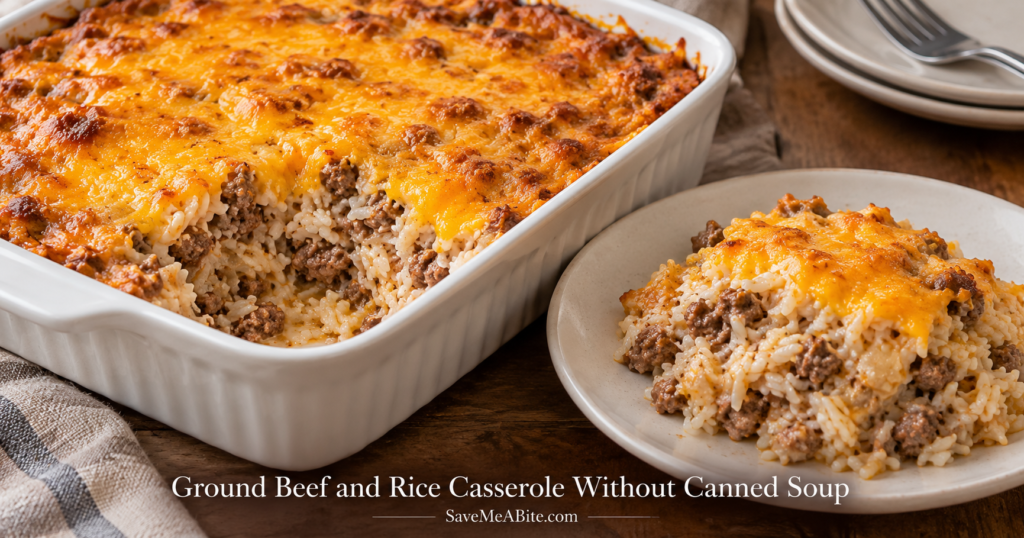
I like a casserole recipe that tells me exactly what to do with the rice before I start. For this ground beef and rice casserole without canned soup, the answer is simple: use rice that is already cooked. The oven warms the filling and melts the cheddar topping; it isn’t responsible for cooking dry rice.
Under that cheese topping is a mixture of browned ground beef, softened onion, tender rice, and a homemade creamy sauce. There’s no cream of mushroom soup, no cream of chicken soup, and no mushrooms.
This version fits an 8×8-inch baking dish. It’s a practical size when you want a beef-and-rice dinner without filling a large casserole pan.
What Makes This a No-Soup Casserole?
The sauce starts with butter and flour, followed by beef broth and milk. That gives the filling moisture and body without needing condensed soup.
I’d rather explain that little sauce clearly than tell you to “make a roux” and leave you guessing. You’re simply cooking flour in melted butter, then gradually stirring in liquid until it becomes smooth and lightly thickened.
A small amount of cheddar goes into the filling. The rest goes over the top.
The rice and beef should still be visible after everything is mixed. This is a creamy rice casserole, not rice floating in gravy.
If you prefer a potato topping, my tater tot casserole with homemade sauce uses the same basic idea of making the sauce without opening a can of soup.
The Rice Must Be Cooked Before Assembly
Measure 2 cups of cooked rice, not 2 cups of dry rice. That distinction changes the entire recipe.
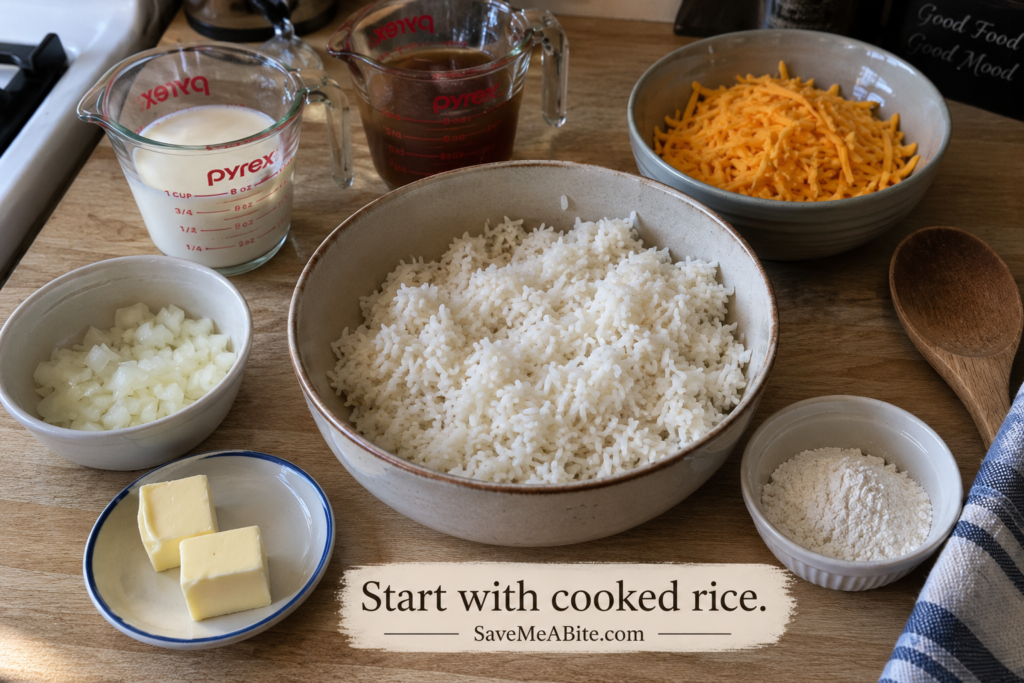
Dry rice needs considerably more liquid and cooking time. Substituting it here can leave the grains hard while the rest of the casserole dries out.
For this recipe, cook your rice according to its package instructions, fluff it, and measure the finished amount. If you already have safely refrigerated leftover rice, measure 2 cups and gently separate any clumps.
Which Rice Should You Use?
Long-grain white rice is the starting choice because its grains remain fairly distinct.
Cooked jasmine or basmati rice can also fit this style of casserole, although their flavor and texture differ. Cooked brown rice will give a chewier result.
Whatever you choose, it should already be tender before it meets the beef mixture. Baking won’t reliably fix undercooked grains in this amount of sauce.
What About Microwave Rice?
Plain microwave rice can be convenient. Prepare it as directed on the package, then measure 2 cups.
Check that it is plain rice rather than a seasoned mixture. Added salt and flavorings can change the finished casserole.
What the Filling Should Look Like
The sauce should coat a spoon but remain a little looser than a very thick gravy. Rice absorbs moisture, so an overly thick sauce can make the finished casserole dry.
Once you add the beef, rice, and cheese, the filling should fall from a spoon in soft clumps. It should spread easily in the baking dish.
I’d use these two checkpoints before baking:
- The mixture is moist enough that the rice looks lightly coated throughout.
- There is no separate puddle of broth or milk beneath the filling.
If the mixture is stiff, add milk a tablespoon at a time. If it looks soupy, gently simmer it in the skillet before transferring it to the dish.
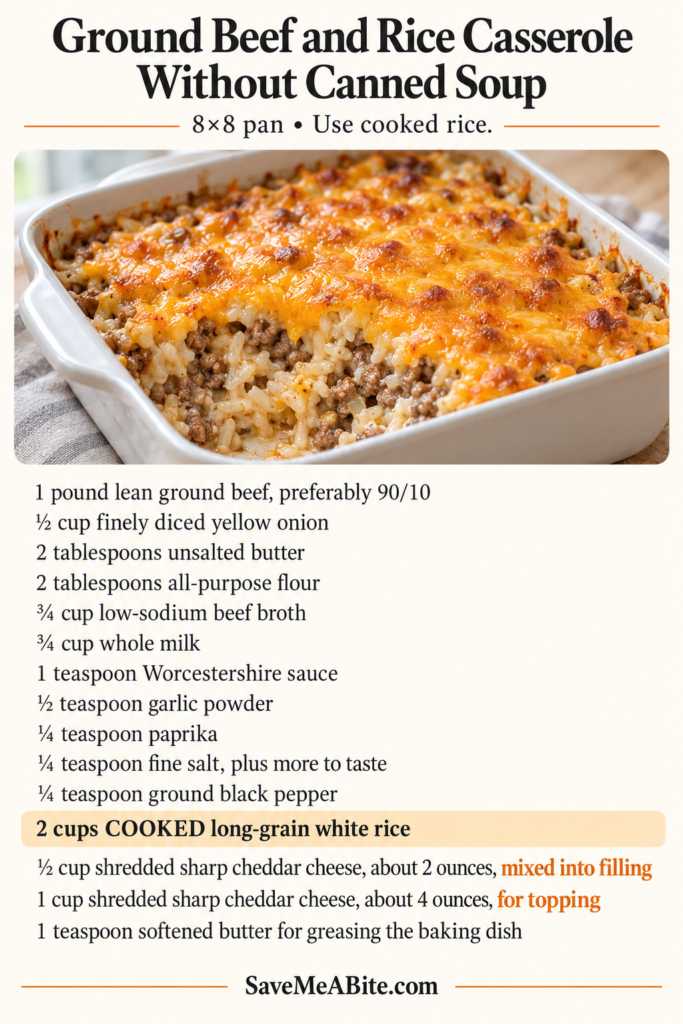
Ground Beef and Rice Casserole Without Canned Soup Recipe
Yield: Approximately 4 generous servings
Baking dish: 8×8 inches, at least 2 inches deep
Prep time: Approximately 20 minutes with cooked rice ready
Bake time: Approximately 20–30 minutes
Rest time: 5 minutes
Total time: Approximately 45–55 minutes, plus rice cooking time if needed
Oven temperature: 375°F
Ingredients
- 1 pound lean ground beef, preferably 90/10
- ½ cup finely diced yellow onion
- 2 tablespoons unsalted butter
- 2 tablespoons all-purpose flour
- ¾ cup low-sodium beef broth
- ¾ cup whole milk
- 1 teaspoon Worcestershire sauce
- ½ teaspoon garlic powder
- ¼ teaspoon paprika
- ¼ teaspoon fine salt, plus more to taste
- ¼ teaspoon ground black pepper
- 2 cups cooked long-grain white rice
- ½ cup shredded sharp cheddar cheese, about 2 ounces, mixed into filling
- 1 cup shredded sharp cheddar cheese, about 4 ounces, for topping
- 1 teaspoon softened butter for greasing the baking dish
Instructions
- Prepare the rice and oven. Have 2 cups of fully cooked rice ready. Heat the oven to 375°F. Grease an 8×8-inch baking dish with 1 teaspoon softened butter.
- Cook the beef and onion. Put the ground beef and diced onion in a large skillet over medium-high heat. Cook, breaking the beef into small crumbles, until the onion softens and the ground beef reaches 160°F. Drain excess grease and transfer the mixture to a bowl.
- Make the sauce base. Reduce the heat to medium and melt the 2 tablespoons butter in the skillet. Stir in the flour and cook for about 1 minute, stirring constantly.
- Whisk in the liquids. Slowly add the broth while whisking, then gradually add the milk. Stir in the Worcestershire sauce, garlic powder, paprika, salt, and pepper.
- Lightly thicken the sauce. Bring to a gentle simmer. Cook for approximately 2–4 minutes, stirring frequently, until smooth and thick enough to lightly coat a spoon. Avoid reducing it to a stiff paste.
- Combine the filling. Return the beef and onion to the skillet. Fold in the cooked rice and heat gently, stirring, until the mixture is hot throughout. Remove from the heat and stir in ½ cup cheddar. If the filling is stiff, add milk a tablespoon at a time. Taste and adjust the seasoning.
- Fill the baking dish. Spread the mixture evenly in the prepared dish without packing it down firmly. Sprinkle the remaining 1 cup cheddar over the surface.
- Bake. Bake uncovered for approximately 20–30 minutes, until the filling bubbles at the edges, the cheese melts, and the center reaches 165°F. If the cheese browns too quickly, loosely cover the dish with foil.
- Rest and serve. Let the casserole stand for about 5 minutes, then spoon onto plates.
Small Details That Keep the Texture Right
Drain the Beef Before Making the Sauce
Extra beef grease can leave an oily layer around the casserole’s edges. Drain the beef, then use the measured butter to start the sauce.
That also makes the recipe more consistent when different packages of ground beef contain different amounts of fat.
Break Up Cold Rice Gently
Refrigerated rice often sticks together. Separate it gently with a fork before folding it into the sauce.
Large clumps can stay drier in the middle while the loose grains around them absorb the sauce. You don’t need to crush the rice; just loosen it.
Mix the Cheese Off the Heat
Stir the filling cheese in after removing the skillet from the burner. The hot mixture will melt it without needing a hard boil.
Once the cheese is added, the filling should look creamy rather than oily.
Don’t Keep Baking After the Center Is Ready
Everything in the filling is cooked before assembly. The casserole needs to heat through and melt its topping.
Leaving it in the oven well beyond that point can dry out the rice, especially around the edges. Use the center temperature and the appearance of the filling rather than waiting for the entire top to turn dark brown.
Choosing the Ingredients
Ground Beef
Lean ground beef is a useful starting point. Higher-fat beef can work, but draining becomes more important.
Keep the crumbles small enough to mix evenly with the rice. Large pieces make some spoonfuls mostly beef and others mostly rice.
Broth and Seasoning
Low-sodium broth helps you control the salt level. The cheddar and Worcestershire sauce contribute seasoning too.
I’d taste after mixing the filling, when you can judge all those ingredients together. Add salt gradually rather than assuming the sauce needs a large amount at the beginning.
Cheddar
Sharp cheddar gives the casserole a noticeable cheese flavor. Mild cheddar produces a gentler result.
The topping should be an even layer, not a thick pile in the middle. One cup is intended to cover the square pan while leaving the beef-and-rice filling as the main part of dinner.
What I’d Serve Alongside It
A simple green vegetable or salad makes sense beside a creamy casserole.
Steamed broccoli, roasted green beans, or a cucumber salad would add a different texture without requiring another complicated recipe.
I’d serve vegetables alongside the first batch rather than mixing extra ingredients into the filling. Adding vegetables changes its volume and moisture, so it’s useful to establish the basic recipe first.
Making Dinner Ahead
For the most predictable timing, prepare the rice and beef ahead, refrigerate them promptly in shallow containers, and make the sauce when you’re ready to assemble.
Fold those chilled ingredients into the sauce and heat the mixture thoroughly in the skillet before transferring it to the baking dish.
You can also refrigerate an assembled casserole, but it will take longer to heat than the warm filling used in these instructions. Follow the baking dish manufacturer’s guidance about moving a cold dish into a hot oven.
Keep the center-temperature check either way. A melted cheese topping doesn’t prove the middle is hot.
Storing Leftovers
Transfer leftovers to shallow covered containers and refrigerate within two hours, or within one hour when the surrounding temperature is above 90°F. Keep the refrigerator at 40°F or below, use leftovers within three to four days, and reheat them to 165°F.
Microwave Reheating
Put a serving in a microwave-safe bowl or plate. Add a small splash of milk or broth if the rice looks dry, then cover with a vented microwave-safe cover.
Heat in short intervals, stirring or rearranging the portion between intervals where practical. Check several places with a thermometer so the entire serving reaches 165°F.
Oven Reheating
Place the portion in an oven-safe dish and cover it to help hold moisture. Heat at 350°F until the center reaches 165°F.
Reheat only what you plan to eat. A single portion is easier to warm evenly than repeatedly heating the whole casserole.
Questions About Beef and Rice Casserole
Can I use uncooked rice?
Not in this recipe. The liquid amount and baking method are designed for 2 cups of cooked rice. Dry rice requires a different recipe.
Is this the same as hamburger rice casserole?
“Hamburger” often refers to ground beef in casserole names. This is a hamburger-and-rice casserole made with homemade sauce rather than condensed soup.
Can I make it without cream of mushroom soup?
Yes. There is no canned soup in the recipe, and there are no mushrooms. Butter, flour, broth, and milk make the sauce.
Can I use brown rice?
Use fully cooked brown rice and measure 2 cups. Expect a firmer, chewier texture than white rice.
Why did my casserole turn out dry?
The sauce may have been reduced too much, the rice may have been measured incorrectly, or the casserole may have baked too long. Before baking, the filling should be moist and easy to spread.
Why is the casserole greasy?
Undrained beef is one possible cause. Excessive heat after adding cheese can also affect the sauce. Drain the meat well and mix the filling cheese in off the burner.
Can I use a bigger pan?
A bigger pan spreads the filling thinner and exposes more of it to oven heat. That changes the topping coverage and baking time. An 8×8-inch pan is the intended size for these quantities.
Will it cut into neat squares?
Expect a spoonable casserole rather than firm slices. The short resting time helps the filling settle, but the sauce should keep it moist.
Mara Whitcomb writes for Save Me a Bite, sharing approachable recipes and clear cooking instructions for everyday meals.
Pingback: How to Make Casserole Sauce Without Canned Soup – Save Me A Bite