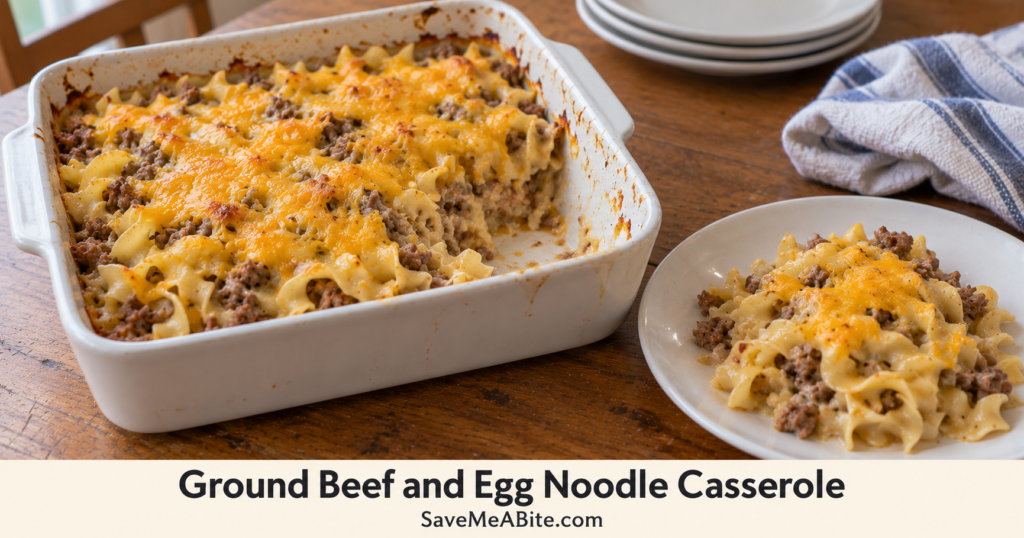
I like a beef noodle casserole with enough sauce to coat the noodles without turning dinner into a bowl of gravy. This ground beef and egg noodle casserole without canned soup keeps that balance simple: browned beef, wide egg noodles, a homemade creamy sauce, and a modest cheddar topping.
There’s no cream of mushroom soup, tomato sauce, or sour cream in this version. The sauce comes together in the same skillet used for the beef, and the casserole finishes in an 8×8-inch baking dish.
The noodles need a short boil before assembly. They should be slightly firm when you drain them because they’ll spend more time in the oven. That small detail matters more than adding extra cheese or another seasoning.
A Creamy Beef Noodle Casserole Without the Soup Can
Butter and flour give the sauce its body. Beef broth adds savory flavor, while milk softens it into a creamy base.
I’d keep the seasonings familiar here. Onion, garlic powder, black pepper, paprika, and a little Worcestershire sauce support the beef without making the casserole taste like a packet of seasoning.
A small amount of cheddar melts into the filling. The rest goes on top, where it can melt around the folds of the noodles.
This is the noodle version of a simple homemade-sauce dinner. If you prefer potatoes, my 8×8 tater tot casserole without canned soup has a golden potato topping over a creamy beef filling.
Use Wide Egg Noodles and Measure Them Dry
The recipe calls for 6 ounces of dry wide egg noodles. Weigh them before boiling.
Noodles are awkward to measure by the cup because their shapes leave different amounts of empty space. A scale makes the quantity easier to repeat.
Wide egg noodles give the casserole soft folds that catch the sauce. Extra-wide noodles can also suit this style of dish, but package cooking times vary.
How Long Should You Boil Them?
Start checking about two minutes before the shortest cooking time on the package.
The noodles should bend easily and have a slightly firm center. They shouldn’t be crunchy, but they also shouldn’t be completely soft.
Drain them once they reach that point. They will continue cooking as the hot sauce and oven heat work through the casserole.
Don’t Leave Them Sitting in Water
Once the noodles are ready, drain them promptly. Leaving them in hot water continues the cooking even when the burner is off.
I’d time the noodles to finish close to when the sauce is ready. If they stick together after draining, gently loosen them when folding them into the filling rather than pulling hard and tearing them.
What the Sauce Should Look Like Before Baking
The sauce should coat a spoon and still pour from it easily.
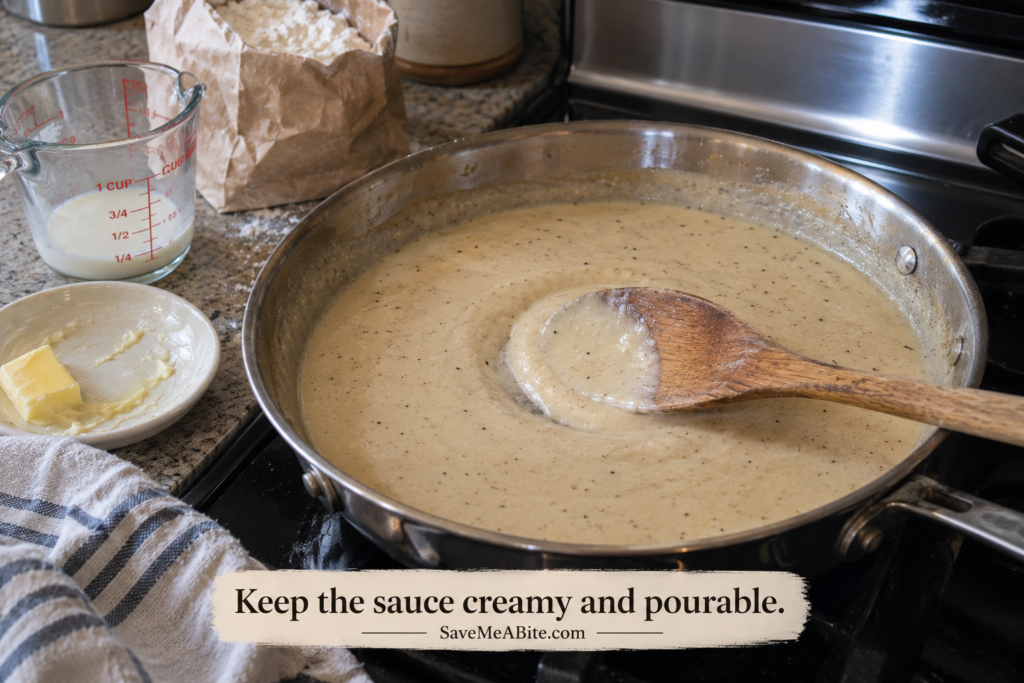
Once the beef and noodles are added, the filling should look slightly looser than you want the finished casserole. The noodles will absorb some moisture during baking.
A thick paste going into the oven usually means dry noodles coming out.
If the filling looks stiff or difficult to fold, add milk a tablespoon at a time. If liquid collects separately beneath the mixture, simmer gently before assembly.
For a different starch, my ground beef casserole made with cooked rice uses rice that is already tender before it reaches the baking dish.
Ground Beef and Egg Noodle Casserole Recipe
Yield: Approximately 4 generous servings
Baking dish: 8×8 inches, at least 2 inches deep
Prep time: Approximately 25 minutes
Bake time: Approximately 20–25 minutes
Rest time: 5 minutes
Total time: Approximately 50–55 minutes
Oven temperature: 375°F
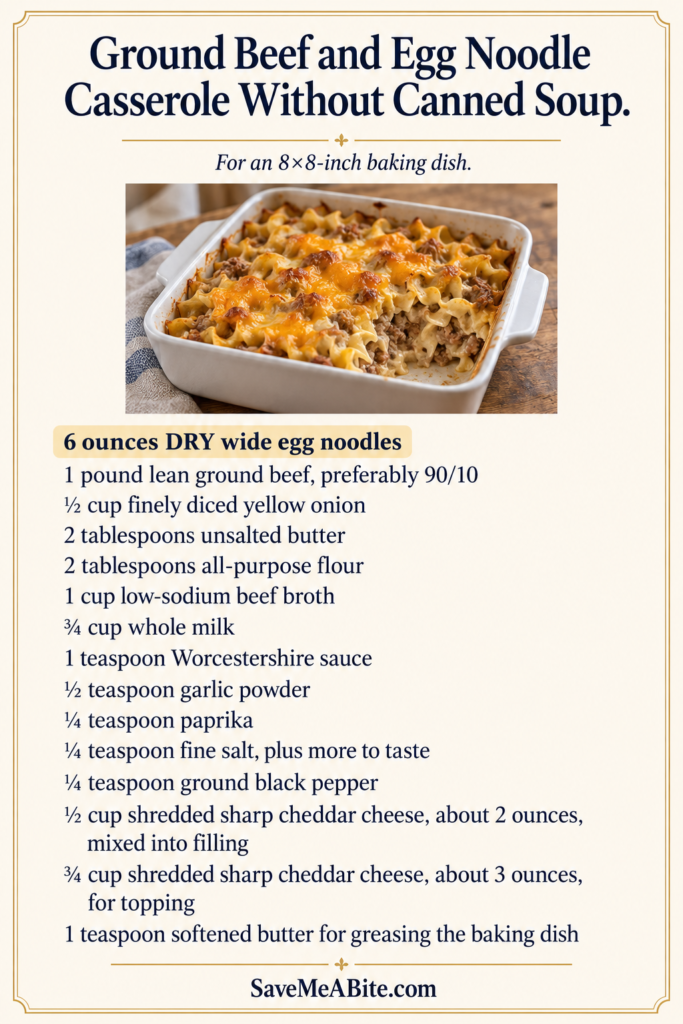
Ingredients
- 6 ounces dry wide egg noodles
- 1 pound lean ground beef, preferably 90/10
- ½ cup finely diced yellow onion
- 2 tablespoons unsalted butter
- 2 tablespoons all-purpose flour
- 1 cup low-sodium beef broth
- ¾ cup whole milk
- 1 teaspoon Worcestershire sauce
- ½ teaspoon garlic powder
- ¼ teaspoon paprika
- ¼ teaspoon fine salt, plus more to taste
- ¼ teaspoon ground black pepper
- ½ cup shredded sharp cheddar cheese, about 2 ounces, mixed into filling
- ¾ cup shredded sharp cheddar cheese, about 3 ounces, for topping
- 1 teaspoon softened butter for greasing the baking dish
Instructions
- Prepare the oven and baking dish. Heat the oven to 375°F. Grease an 8×8-inch baking dish with 1 teaspoon softened butter.
- Boil the noodles. Bring a pot of water to a boil. Add the egg noodles and cook until slightly firm, starting your checks approximately two minutes before the shortest package cooking time. Drain promptly.
- Cook the beef and onion. While the noodle water heats, place the beef and onion in a large skillet over medium-high heat. Break the meat into small crumbles and cook until the onion softens and the beef reaches 160°F. Drain excess grease and transfer the mixture to a bowl.
- Start the sauce. Reduce the skillet heat to medium. Melt the 2 tablespoons butter, stir in the flour, and cook for approximately 1 minute while stirring.
- Add the liquids and seasonings. Gradually whisk in the broth, followed by the milk. Stir in the Worcestershire sauce, garlic powder, paprika, salt, and pepper.
- Lightly thicken. Bring to a gentle simmer and cook for approximately 2–4 minutes, stirring frequently. The sauce should lightly coat a spoon while remaining pourable.
- Combine the filling. Return the beef and onion to the skillet. Remove from the heat and stir in ½ cup cheddar. Gently fold in the drained noodles. Add milk a tablespoon at a time if needed to keep the mixture moist and easy to spoon. Taste and adjust the seasoning.
- Assemble. Transfer the filling to the baking dish and spread it evenly without pressing it down. Scatter the remaining ¾ cup cheddar over the top.
- Bake uncovered. Bake for approximately 20–25 minutes, until the sauce bubbles around the edges, the cheese melts, and the center reaches 165°F. Loosely cover with foil if the top browns before the center is ready.
- Rest briefly. Let the casserole stand for 5 minutes before serving.
How to Keep the Noodles From Getting Mushy
The first step is controlling the boil. Fully softened noodles can become fragile after another stretch in the oven.
The second is handling them gently. Fold them into the sauce with a broad spoon or spatula instead of stirring rapidly.
Finally, stop baking once the center is hot and the topping is melted. This casserole doesn’t need a deeply browned crust across the entire surface.
I’d rather have tender noodles and a creamy filling than keep baking just to chase a darker cheese topping.
Why the Baking Dish Shouldn’t Be Overfilled
An 8×8 dish can vary in depth and usable capacity. Use one at least 2 inches deep, and leave clearance below the rim.
If the mixture reaches the very top, put the excess in a separate small oven-safe dish. A rimmed baking sheet underneath the main dish can catch drips, but it doesn’t make an overfilled casserole cook evenly.
Ingredient Choices and Simple Adjustments
Ground Beef
Lean beef keeps the sauce from becoming greasy. If your beef contains more fat, drain it thoroughly before making the sauce.
Small crumbles distribute more evenly among the noodles. Large pieces can make serving awkward and leave some bites with very little beef.
Milk and Broth
Whole milk gives the sauce a fuller texture. Two-percent milk can produce a lighter result.
Use low-sodium broth so you can adjust the seasoning yourself. Cheese and Worcestershire sauce also contribute salt.
Cheese
Sharp cheddar adds flavor without requiring a thick topping. Mild cheddar is an option if you want something gentler.
Shred the cheese into reasonably small pieces so it melts evenly. A few thicker shreds are fine; large chunks can leave uneven pockets.
Other Pasta Shapes
Small shells or elbow macaroni would change the texture and the amount of space the pasta occupies. Their cooking times also differ.
I’d use wide egg noodles for the first batch. If you later try another shape, keep the dry weight consistent and watch the filling’s moisture before baking.
What I’d Put Beside It
A crisp salad, steamed broccoli, or simple cooked green beans would balance the soft noodles and creamy sauce.
The casserole already includes meat and pasta, so another substantial starch isn’t necessary. Bread is optional if you want something for the last little bit of sauce.
I’d keep the side dish easy. The casserole is the main part of dinner, and a vegetable can round out the plate without creating another full recipe to manage.
Preparing Parts Ahead
You can cook the beef and onion ahead, then refrigerate them promptly in a shallow covered container.
When assembling later, warm them in the freshly made sauce before folding in the noodles. That keeps the baking instructions closer to the warm-filling method used here.
For the noodles, cooking them shortly before assembly gives you more control over texture. Refrigerated cooked noodles can clump and absorb moisture differently.
If you refrigerate the fully assembled casserole, allow additional baking time and follow your dish manufacturer’s guidance about temperature changes. Check the center rather than relying on the topping.
Storing and Reheating
Refrigerate leftovers in shallow containers within two hours, or within one hour when the surrounding temperature exceeds 90°F. Keep them at 40°F or below and use within three to four days. Reheat to 165°F throughout.
Microwave Method
Place a portion in a microwave-safe dish and add a small splash of milk or broth if the noodles look dry.
Cover with a vented microwave-safe cover and heat in short intervals. Gently rearrange the noodles between intervals and check several spots for a temperature of 165°F.
Oven Method
Put the portion in an oven-safe dish, add a little liquid if needed, and cover. Heat at 350°F until the center reaches 165°F.
The noodles can dry around exposed edges, so covering is useful during reheating. Uncover briefly at the end if you want the cheese surface a little firmer.
Questions About This Beef Noodle Casserole
Can I make hamburger noodle casserole without cream of mushroom soup?
Yes. This recipe makes its sauce from butter, flour, broth, and milk. It doesn’t use mushrooms or another canned soup as a replacement.
Do I have to cook the egg noodles first?
Yes. The sauce quantity and short baking time are designed for noodles that have already been boiled until slightly firm. Dry noodles need a different liquid balance and method.
Does it contain sour cream?
No. Milk and a little cheddar provide the creamy texture.
Why are my noodles dry?
They may have absorbed an overly thick sauce, or the casserole may have baked too long. Before assembly, the filling should be moist and easy to fold.
Why did the noodles fall apart?
Overboiling is one possible cause. Rough stirring and prolonged baking can also break softened egg noodles. Drain them while slightly firm and fold gently.
Can I skip the cheese topping?
You can leave off the topping while keeping the ½ cup cheese in the filling. The surface may dry more readily, so loosely cover if needed and watch the center temperature.
Can I bake it in a 9×13 pan?
That pan would spread this quantity into a thin layer, changing the topping coverage and baking time. Use the specified 8×8 dish for the intended proportions.
Can I add mushrooms?
That would be a variation rather than the basic recipe. Cook them separately until their released moisture evaporates before adding them to the filling. Raw mushrooms can release water into the sauce during baking.
Mara Whitcomb writes for Save Me a Bite, sharing approachable recipes and clear cooking instructions for everyday meals.