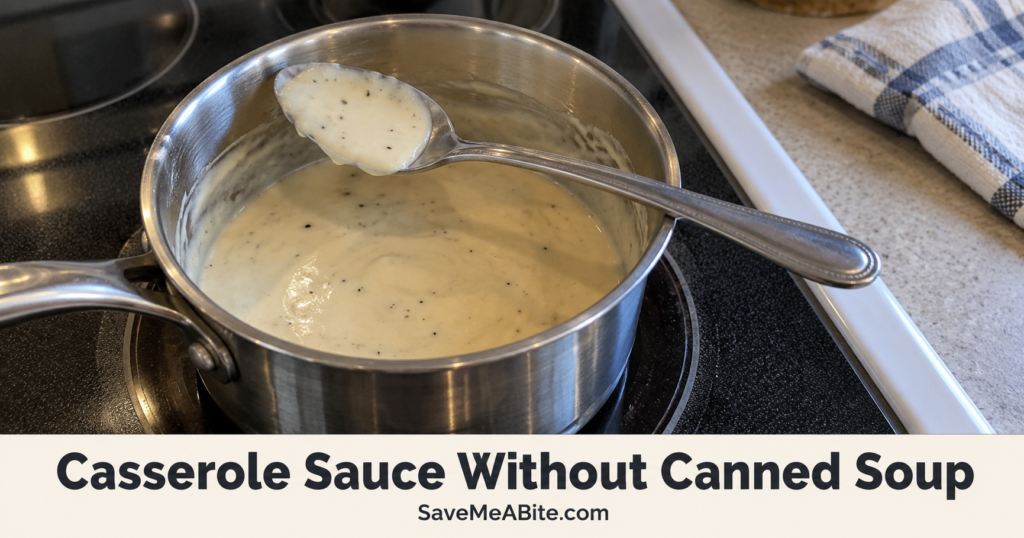
You can make creamy casserole sauce without canned soup using butter, flour, broth, and milk. The part I’d pay the most attention to is the thickness: the sauce needs to suit what you’re putting in the casserole, especially when rice or noodles are involved.
A homemade sauce gives you control over seasoning and consistency. But it isn’t automatically interchangeable with a can of condensed soup. A casserole written for condensed soup may already include extra milk or broth, and adding a full batch of homemade sauce on top of those liquids can make the filling watery.
I’d use the method below as a starting point, then judge the sauce with the rest of the filling before it goes into the oven.
What Replaces Canned Soup in a Casserole?
Butter and flour create a thickening base. Broth adds savory flavor, while milk makes the sauce creamy.
The ingredients are simple, but each has a job.
Flour helps hold the liquid in a sauce rather than leaving it loose in the baking dish. Butter helps distribute the flour so you can cook it before adding liquid. Broth and milk provide the moisture that coats the meat, vegetables, rice, or pasta.
For a beef casserole, beef broth makes sense. For chicken or a milder vegetable casserole, chicken broth is a reasonable starting choice.
Low-sodium broth is especially useful because cheese, seasoned meat, and other ingredients can add salt later.
Why There Isn’t One Perfect Soup Replacement Ratio
A can of condensed soup is concentrated. The homemade sauce in this guide contains more liquid and is intended to be adjusted as part of the complete casserole.
That difference matters.
If an existing recipe calls for condensed soup plus a cup of milk, you shouldn’t assume you can replace the soup with this whole sauce recipe and still add that cup of milk.
You could end up adding substantially more moisture than the original filling was designed to hold.
I’d look at three things before adapting a recipe:
- How much additional liquid the recipe already contains.
- Whether its rice or pasta is cooked before assembly.
- Whether its vegetables will release water during baking.
If you want a casserole already written around homemade sauce, the ground beef and rice casserole without canned soupspecifies both its sauce quantities and the amount of cooked rice.
Start With the Butter and Flour
Melt the butter over medium heat. Once melted, stir in the flour until no dry patches remain.
The mixture will look like a soft paste. It may spread across the pan or gather around the spoon, depending on the pan size and heat.
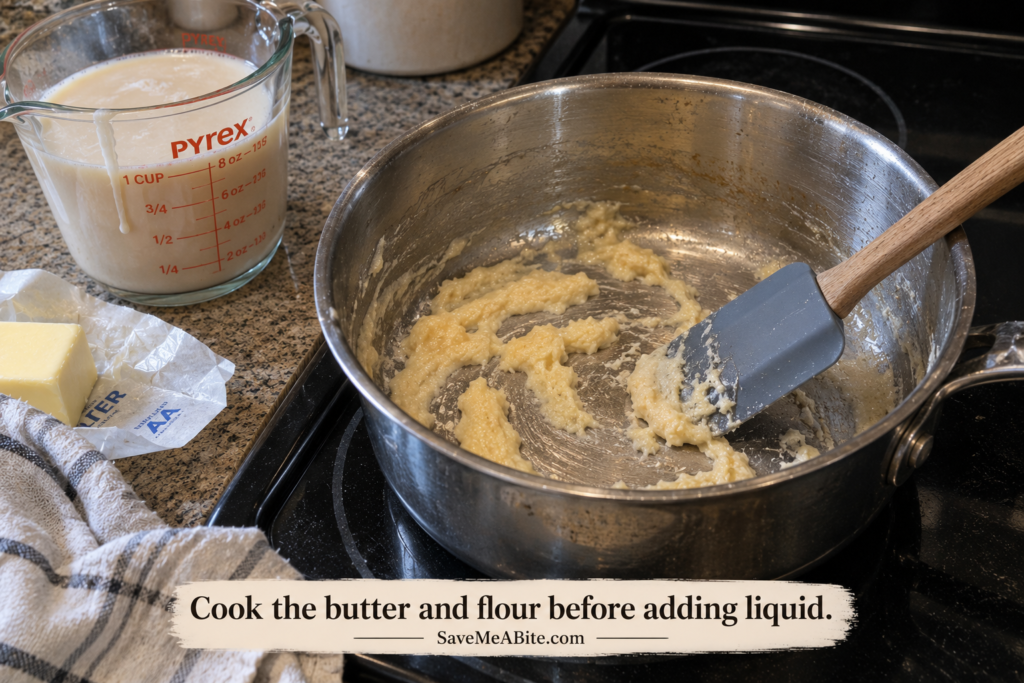
Cook it for about one minute while stirring. You’re looking for a pale mixture, not a dark brown one.
I’d lower the heat if it starts coloring quickly. A browned flour base creates a different flavor and appearance than the light, creamy sauce we’re aiming for.
Why Not Add Flour Directly to the Milk?
Dry flour added to hot liquid can clump. The outside of a clump becomes wet while dry flour stays trapped inside.
Mixing the flour with butter first helps distribute it before the liquid arrives.
That doesn’t make lump prevention automatic, though. Adding the broth gradually and stirring thoroughly still matters.
Add the Liquid in Stages
Start with a small splash of broth and stir or whisk until the mixture smooths out.
It can look thicker at first. That’s normal: a small amount of liquid is mixing with concentrated flour paste.
Add another splash, smooth it again, and continue until the broth is incorporated. Then gradually add the milk.
Scrape around the bottom edges of the pan, where thick paste can hide. A sauce may look smooth in the center while a little flour mixture remains along the sides.
Once the liquid is incorporated, bring it to a gentle simmer.
How Much Heat Should You Use?
Medium heat is a useful starting point, but burners and pans differ.
You want gentle bubbling and regular stirring. A hard boil isn’t necessary and makes it easier for milk to catch on the bottom.
If the sauce starts sticking, lower the heat and stir more frequently.
How Thick Should Casserole Sauce Be?
The starting sauce should lightly coat a spoon while still pouring easily.
Lift the spoon and watch what happens. The sauce should leave a thin coating rather than sliding off exactly like milk. It shouldn’t sit on the spoon in a stiff lump.
That’s the sauce by itself. The more important check comes after you combine it with the filling.
Rice, noodles, and meat change the way the mixture behaves. A sauce that seems slightly loose in the saucepan can become much thicker once mixed with rice.
For Cooked Rice
Keep the sauce somewhat loose before combining it with rice.
Cooked rice can absorb additional moisture during baking. A filling that already looks dry or tightly packed in the skillet may become drier in the oven.
The rice mixture should be moist and easy to spread, with no separate puddle underneath it.
For Cooked Noodles
The sauce should coat the noodles and settle into their folds.
Fold gently so you don’t tear softened pasta. If the filling is stiff or the noodles look barely coated, add liquid a little at a time.
Noodles that are completely soft before assembly can also lose texture during baking, regardless of how good the sauce is.
For a Potato-Topped Filling
The filling should be thick enough to support the topping without loose liquid collecting around the edges.
You’re looking for a creamy, spoonable mixture rather than a thin gravy.
The small tater tot casserole with homemade sauce uses a thicker sauce base than the rice version. That’s a useful example of why the same ingredients can need different proportions.
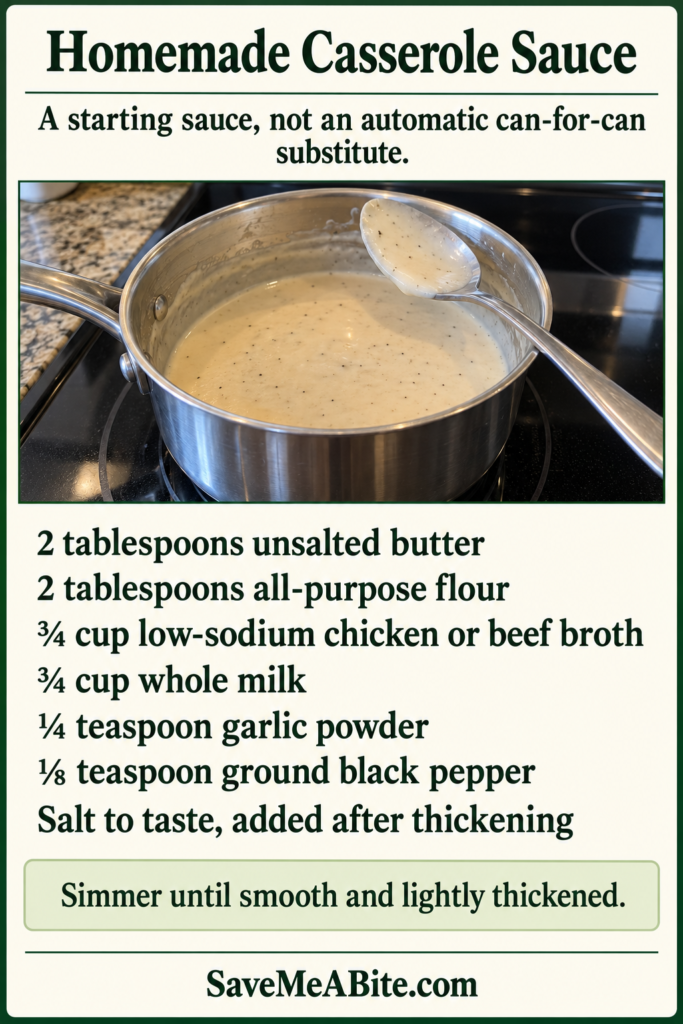
Homemade Casserole Sauce Starting Recipe
This makes approximately 1½ cups before simmering reduces it. The finished yield depends on cooking time.
Use it as a sauce base for recipe development or as a separately served creamy sauce. When adapting an existing casserole, account for all the recipe’s liquids rather than treating this as a guaranteed replacement for one can of soup.
Prep time: Approximately 5 minutes
Cooking time: Approximately 5–8 minutes
Estimated yield: About 1¼–1½ cups
Ingredients
- 2 tablespoons unsalted butter
- 2 tablespoons all-purpose flour
- ¾ cup low-sodium chicken or beef broth
- ¾ cup whole milk
- ¼ teaspoon garlic powder
- ⅛ teaspoon ground black pepper
- Salt to taste, added after thickening
Instructions
- Melt the butter. Place a small saucepan over medium heat and melt the butter without browning it.
- Cook the flour. Stir in the flour until it forms a smooth paste. Cook for approximately one minute, stirring constantly.
- Gradually add broth. Add a small splash of broth and whisk smooth. Continue adding the broth in stages, whisking between additions.
- Add milk and seasonings. Gradually whisk in the milk, garlic powder, and black pepper.
- Simmer gently. Cook for approximately 2–4 minutes after the sauce reaches a gentle simmer, stirring frequently, until lightly thickened. Timing varies with the pan and burner.
- Adjust consistency. If too thick, add milk or broth one tablespoon at a time. If too thin, continue gently simmering and stirring.
- Taste before salting. Add salt gradually. If the sauce is going into a casserole with cheese or other salty ingredients, check seasoning again after combining the filling.
How to Fix Lumpy Sauce
First, take the pan off the heat and whisk firmly. Small lumps may smooth out with a little attention.
If the sauce is very thick, whisk in a small splash of liquid to make it easier to work.
For stubborn lumps, you can pass the sauce through a fine-mesh strainer into a clean pan, then return it to gentle heat.
I wouldn’t keep adding flour to a lumpy sauce. That can increase thickness without solving the original problem.
Preventing Lumps in the Next Batch
Make sure the flour is fully mixed into the butter before adding liquid.
Add the first few splashes slowly and smooth the mixture between additions. Once the base is smooth and loosened, the remaining liquid is easier to incorporate.
A whisk is useful for this stage, even if you prefer a spoon for the rest of the recipe.
What to Do If the Sauce Is Too Thin
Let it simmer gently for a little longer, stirring regularly.
Flour-thickened sauce needs time and heat to develop its texture. Judging it immediately after adding the milk can make you think it needs more flour when it simply hasn’t finished cooking.
Remember that it will also thicken somewhat as it cools.
If it’s still too loose for the intended casserole, adjust it before adding the filling. Avoid sprinkling dry flour directly into the finished hot sauce.
What to Do If the Sauce Is Too Thick
Add milk or broth one tablespoon at a time, stirring completely after each addition.
Milk keeps the flavor creamy. Broth adds more savory flavor, but it can also add salt.
I’d choose based on what the sauce already needs. If it tastes strongly seasoned, milk may be the better adjustment.
Stop once it coats a spoon and pours easily. You can make a final small adjustment after mixing it with the other ingredients.
Adding Cheese Without Making the Sauce Oily
If you’re adding cheese, finish thickening the sauce first.
Remove the pan from the heat and stir in shredded cheese gradually. The residual heat should melt it.
Cheese changes both the texture and salt level, so taste again afterward.
I wouldn’t use extra cheese as the main fix for a watery sauce. It can make the sauce richer without correcting the liquid balance, and too much heat can encourage an oily texture.
Vegetables Can Change the Filling
A sauce can be the right thickness in the pan and still end up watery in the casserole.
Frozen vegetables may carry excess water. Canned vegetables need draining. Mushrooms and some fresh vegetables release moisture as they cook.
Prepare vegetables before judging the final filling. That might mean thawing and draining, patting dry, or cooking them separately until released water evaporates.
Adding wet vegetables and hoping the oven removes all that moisture is less predictable.
Raw Rice and Pasta Need Their Own Recipe
This sauce isn’t a shortcut for converting a cooked-rice casserole into a raw-rice casserole.
Uncooked rice requires a deliberate liquid amount, sufficient cooking time, and a method that keeps moisture available. Pasta also needs enough liquid and time to hydrate.
Simply adding more milk until the mixture looks loose doesn’t establish the right balance.
For a casserole written with cooked rice or boiled noodles, follow that preparation step. If you want a no-boil version, use a recipe specifically developed for it.
Questions About Homemade Casserole Sauce
Can I make it without mushrooms?
Yes. The starting recipe contains no mushrooms. Its savory flavor comes from broth and seasoning.
Can I replace cream of chicken soup with this?
Possibly, but you need to adjust the complete casserole recipe. This sauce is less concentrated than condensed soup, so additional milk or broth in the original recipe may need reducing.
Can I use water instead of broth?
Water provides moisture but less flavor. If you use it, expect to adjust the seasoning. Broth is the intended starting ingredient.
Can I use two-percent milk?
Yes, although the sauce may taste less rich than one made with whole milk. Keep the flour and liquid measurements the same to start.
Is the sauce gluten-free?
No. It contains all-purpose flour, and broth ingredients also need checking. A gluten-free version requires a different thickener and adjusted method.
Why does my sauce taste like flour?
The flour may not have cooked sufficiently, or the sauce may need more gentle simmering. Cook the butter-and-flour mixture before adding liquid, then let the finished sauce simmer rather than removing it as soon as it warms.
Can I make this into gravy?
It can serve as a mild creamy gravy-style sauce, although the seasoning and thickness may need adjusting for what you’re serving it with. Taste it as a finished sauce rather than assuming casserole seasoning will suit every use.
Should I add salt before or after the cheese?
Make the final salt adjustment after adding cheese. The cheese can contribute enough salt to change what the sauce needs.
Mara Whitcomb writes for Save Me a Bite, sharing approachable recipes and clear cooking instructions for everyday meals.