
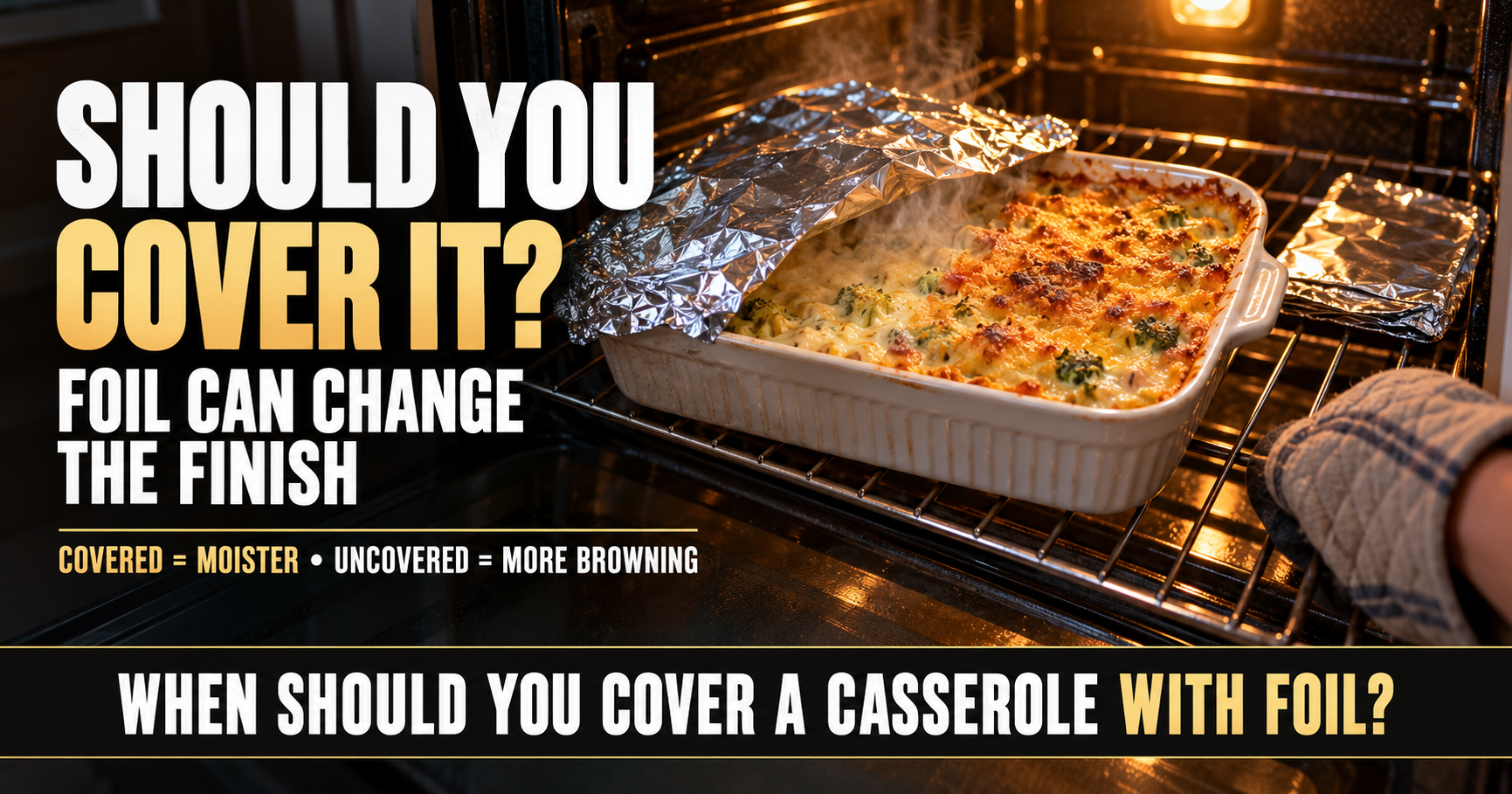
Cover your casserole with foil when the recipe needs to retain moisture or when the topping is browning before the center is done. Leave it uncovered when the filling needs to lose moisture or the topping needs to crisp. Many casseroles use both stages: covered first, uncovered near the end.
I would not cover every casserole automatically. Foil can protect dinner from drying out, but it can also keep a potato topping soft when you wanted it golden and crisp. The useful question is what the casserole still needs to do. For a potato-topped dish where crispness matters, the uncovered 8×8 casserole method shows how that choice works in practice.
My First Check Is What Still Needs Cooking
Before deciding whether foil belongs on the dish, I look at the ingredients.
Are the noodles already cooked? Is the rice dry or cooked? Does the recipe contain raw ingredients that need a specific cooking method? Is the filling ready, with only the topping left to finish?
Those details matter more than whether the dish is called a casserole.
Dry Rice Often Needs a Covered Cooking Stage
A casserole containing dry rice may rely on a fitted cover to retain moisture while the rice cooks.
If that is how the recipe is written, keep the foil on for the specified stage. Removing it early can let liquid evaporate before the rice becomes tender.
I would not trade a recipe’s covered rice-cooking stage for a browner top. The topping can be addressed later. Hard rice is harder to rescue.
Also check the rice type. Regular long-grain rice, instant rice, and brown rice are not interchangeable just because the same pan is involved.
Cooked Rice Does Not Need the Same Treatment
When the rice is already cooked, the oven has a different job. It needs to heat the casserole through and finish the texture or topping.
A cover may still help protect moisture, particularly with a cold or deeper dish. But it is not there to cook dry rice.
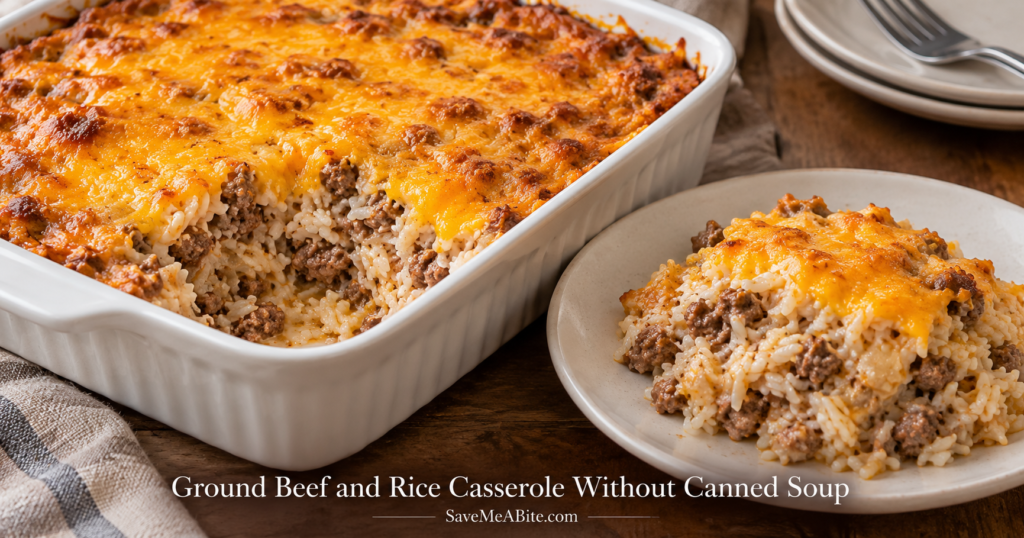
Our ground beef and rice casserole without canned soup uses cooked rice, which is an important distinction before changing its baking method.
Cooked Noodles Need Protection From Drying Out
Noodles exposed above the sauce can become dry or hard around the edges.
A covered stage can help when the filling needs more time to heat. An uncovered stage can then finish the cheese or other topping.
I would check whether the noodles are properly coated before blaming the missing foil. A cover cannot fully compensate for too little sauce or noodles sticking far above the filling.
What Foil Changes Inside the Baking Dish
Foil reduces moisture loss and shields the surface from some direct oven heat. Reynolds’ foil guidance identifies preventing moisture loss as one use for covering casserole dishes.
That can be useful, but retaining moisture is not always the goal.
Covered Baking Keeps More Moisture in the Dish
A fitted cover holds more moisture around the food than an open dish does.
This helps when the recipe depends on moist cooking conditions or when exposed ingredients would dry out before the center finishes.
The cover does not need to touch the food. Its job is to cover the dish, not flatten the topping.
Uncovered Baking Lets the Surface Finish
With the foil removed, moisture can escape more freely and the topping is exposed to oven heat.
That is useful for browning cheese, drying a crumb topping, or crisping potatoes.
It also means the edges can dry out if the dish stays in too long. I look for the intended texture rather than leaving it uncovered until every corner is deeply browned.
A Loose Tent Protects Without Sealing the Dish
A foil tent sits above the food and is left loose rather than tightly crimped around the entire rim.
I use this distinction when explaining a casserole whose top is already browned but whose center still needs time.
The tent shields the topping while allowing more moisture to escape than a fitted cover would. It is not a substitute for a tightly covered cooking stage when the recipe depends on one.
Should I Cover a Casserole With Cheese on Top?
Sometimes. The condition of the filling determines whether covering helps.
If the cheese is browned but the center needs more cooking, a loose foil tent is a reasonable way to protect the surface.
If the filling is done and the cheese still needs browning, leave the foil off.
Melted cheese and browned cheese are different results. A covered casserole can have melted cheese without developing much color on top.
Keep the Foil Off the Cheese
Give the foil a little height rather than pressing it flat against the topping.
A sheet with a raised center can be secured around the rim for a covered stage. For a loose tent, leave it less tightly fitted.
Nonstick foil can also help with sticky toppings when used according to its package directions.
If cheese does stick, remove the foil carefully instead of pulling it sharply across the entire surface.
Should the Cheese Go on at the Beginning or End?
Follow the recipe’s timing.
Cheese added at the beginning has longer to melt and brown. Cheese added later spends less time exposed to heat.
I would consider a later cheese addition when developing a recipe that needs a long covered bake, but I would not present it as a guaranteed improvement for every casserole. Changing the topping stage can change the finished dish.
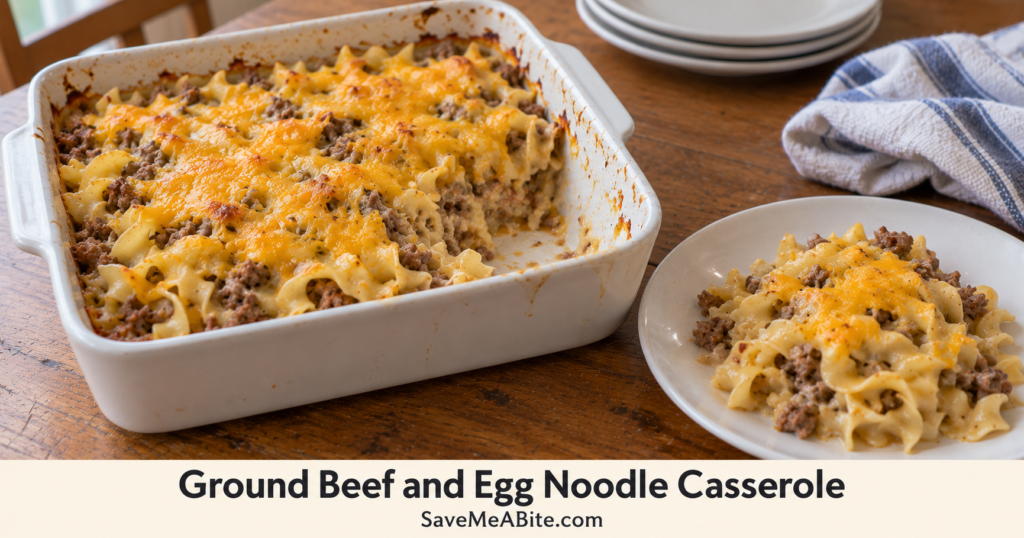
For a smaller noodle dinner, our 8×8 ground beef and egg noodle casserole gives you a recipe to follow rather than guessing at each stage.
Should I Cover Tater Tot Casserole?
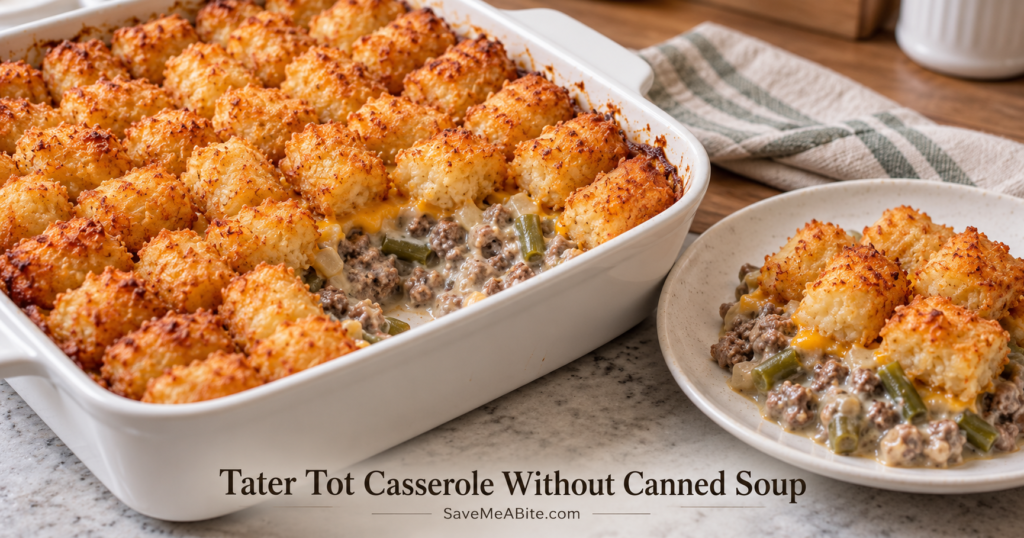
If a tater tot casserole is meant to have a crispy topping, leaving it tightly covered throughout baking works against that goal.
Moisture retained under the foil can keep the potatoes soft. An uncovered finishing stage gives the topping a chance to brown and crisp.
The filling still needs to be properly cooked, so follow the recipe’s full method rather than judging only the tots.
Our tater tot casserole made without canned soup is part of this cluster for exactly that kind of creamy-filling, potato-topping combination.
What if the Tots Brown Before the Filling Is Ready?
Protect the top loosely with foil and continue checking the center according to the recipe.
That may soften the topping somewhat. I would accept that tradeoff while finishing the filling rather than serve a dish with an unfinished center.
Do not assume a broiler will solve the whole problem. It mainly affects the surface, and the baking dish must be approved for broiler use before you consider it.
When I Would Uncover a Casserole
I would remove the cover when the recipe reaches its uncovered stage, or when the ingredients are cooked and the dish needs surface browning or some moisture reduction.
There is no single “last 15 minutes” rule that works for every casserole.
A shallow dish of warm, cooked ingredients may need a different finishing time from a deep casserole assembled cold. A topping can also brown quickly while the filling changes very little.
Use the recipe’s timing as a starting point and keep watching the food.
If the Filling Is Too Wet
When the ingredients are done but the filling is loose, uncovering can allow some excess water to evaporate.
It cannot correct every sauce problem. A large amount of extra liquid or a separated sauce may need a different approach.
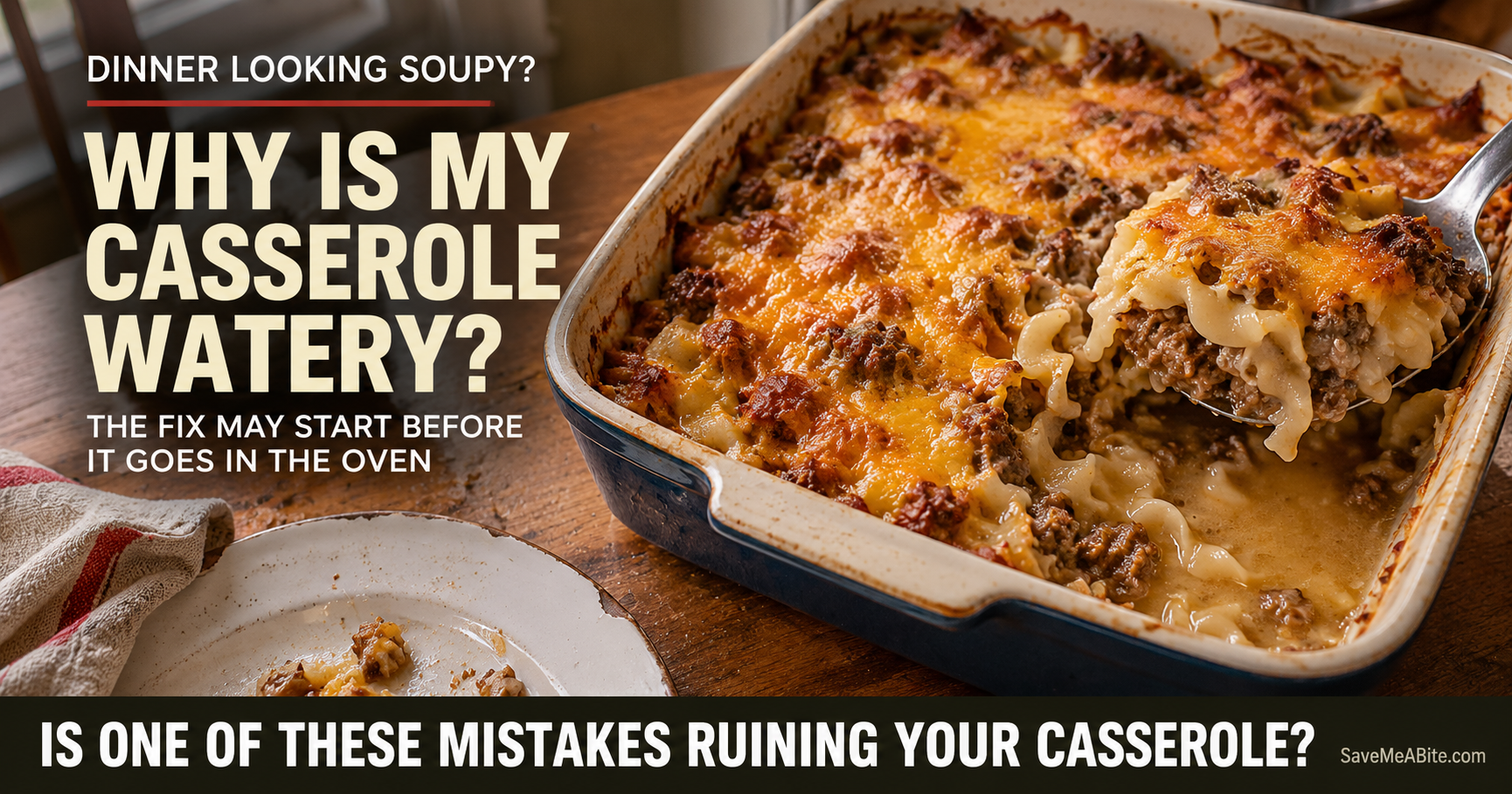
Our guide to why a casserole turns watery explains when an uncovered bake helps and when more oven time can make the noodles worse.
If the Top Is Already Finished
If the topping has the color and texture you want, leaving it exposed while the center cooks can overdo it.
That is when I would consider a loose tent.
The same foil sheet can serve different purposes during one bake, but its fit matters. A tight cover retains more moisture; a loose tent mainly protects the top.
Changing Pan Size Can Change the Foil Decision
A smaller dish can make the same amount of filling much deeper.
That deeper center may need more time, while the exposed topping keeps browning. A foil tent may protect the surface, but it does not turn an unsuitable pan conversion into a dependable recipe.
Likewise, spreading a small batch across a much larger dish creates a thinner layer with more exposed surface.
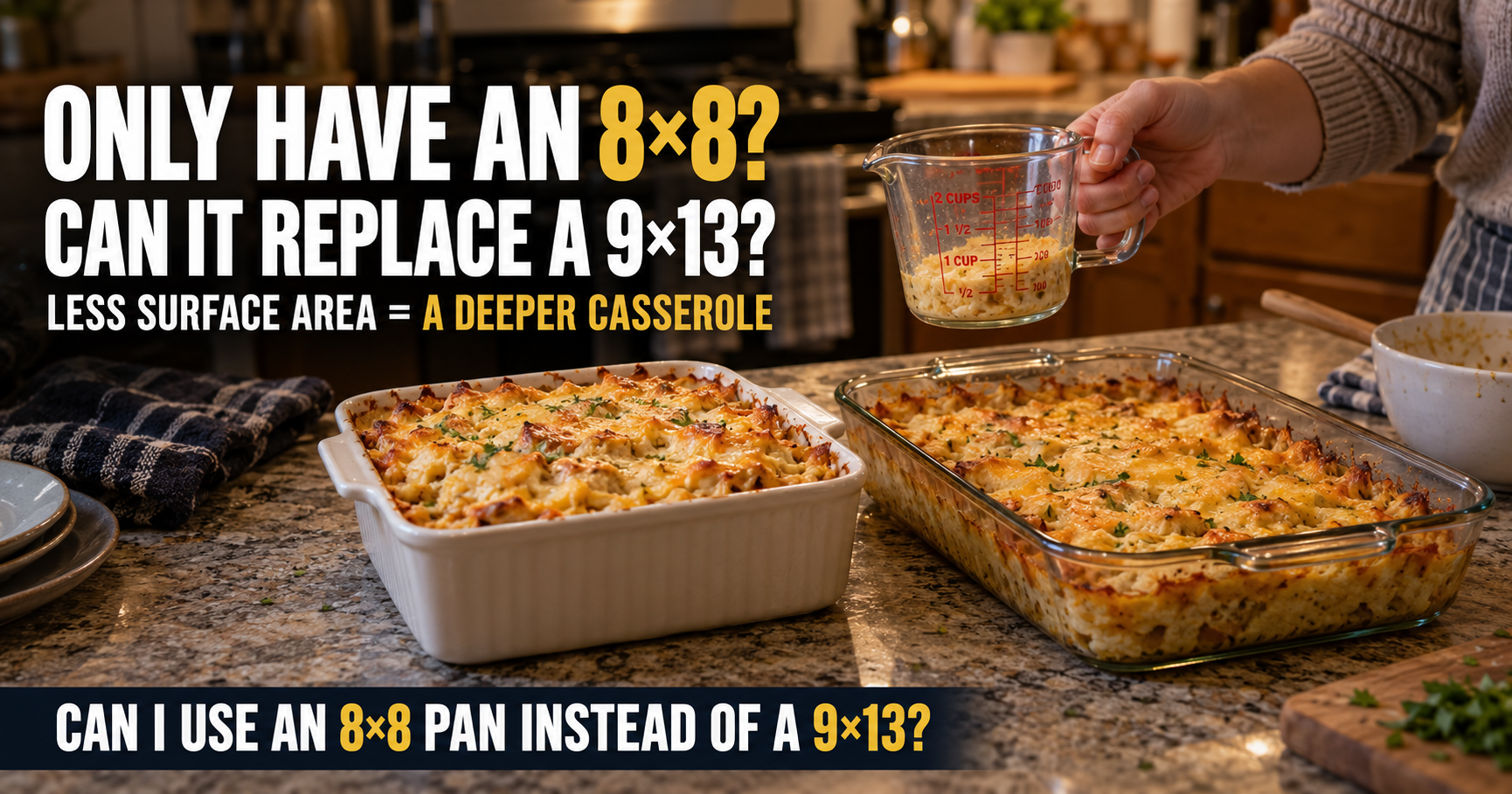
Before adjusting the cover to compensate, check the recipe amount and dish depth. Our guide to using an 8×8 pan instead of a 9×13 walks through that conversion.
Should I Cover a Casserole When Reheating?
In a conventional oven, covering can help keep a cooked casserole from drying out while it reheats.
If the topping benefits from crisping, uncover it near the end once the filling is heating properly.
I would avoid adding extra broth or milk automatically. Some leftovers need a little moisture; others already have enough sauce.
For safety, USDA recommends reheating leftovers to 165°F, checked with a food thermometer. A bubbling edge or browned topping does not confirm the temperature in the center.
For microwave reheating, use an appropriate microwave-safe cover rather than carrying this oven-foil method over to the microwave.
My Covered-or-Uncovered Check Before Baking
I would work through these questions before putting the dish in the oven:
- Does the recipe specify a covered stage?
- Are rice, pasta, and other ingredients raw or already cooked?
- Does the filling need to retain moisture?
- Does the topping need to brown or crisp?
- Is the dish deeper or colder than the recipe expects?
- Is the top finished while the center still needs time?
The answers tell you whether you need a fitted cover, an open dish, or a loose tent. Foil is useful when it has a clear job.
Questions About Covering Casseroles
Does covering a casserole make it cook faster?
There is no dependable rule that covering always makes a casserole faster.
A cover changes moisture retention and how the surface is exposed to heat. The ingredients, dish depth, starting temperature, and cooking method still determine how long the center needs.
I would keep the recipe’s cooking method rather than add foil solely to shorten the time.
Can I use a lid instead of foil?
Yes, if the lid is oven-safe at the recipe’s temperature and suitable for the intended covered cooking stage.
Check the handle and any other parts too. A plastic storage lid that came with a baking dish may not be an oven lid.
A fitted lid also does not act exactly like a loose foil tent.
Do I need to poke holes in the foil?
Usually, I would follow the recipe rather than add holes.
If the method depends on retaining moisture, holes work against that purpose. If the topping needs an uncovered finish, remove the cover at the appropriate stage instead.
Why is my topping soggy under foil?
The cover holds moisture around it.
That may be useful for cooking the filling, but it can soften toppings that need a dry surface to crisp. An uncovered finishing stage may help once the filling is ready.
Can I leave a casserole uncovered the whole time?
Yes, when the recipe is designed for that method.
I would be cautious about removing a required cover from a dry-rice casserole or a dish whose exposed ingredients might dry out before the center cooks.
Should I cover the casserole while it rests?
It depends on the topping.
A tightly fitted cover can soften a crisp surface during the rest. For a topping you want to keep crisp, I would generally avoid sealing the dish tightly.
If retaining warmth matters more than crispness, a loose tent may be useful for a brief rest before serving.
Mara Whitcomb writes practical recipes and cooking guides for Save Me a Bite.