

A watery casserole usually means extra moisture went into the dish, the sauce was too thin, or the casserole needs more cooking or a short rest. The right fix depends on what you’re seeing. A little sauce pooling around a hot serving is different from a pan of liquid with hard rice floating in it. When the sauce itself is the problem, homemade sauce thickness can help you start with the right consistency before assembly.
Before adding flour, cranking up the oven, or dumping in more cheese, check whether the center is cooked and whether the liquid looks like sauce, water, or grease. That quick check can save you from turning a fixable dinner into dry noodles with a soggy bottom.
How to Fix a Watery Casserole Right Now
For a casserole whose ingredients are fully cooked, start with the smallest adjustment. You can always cook it a little longer. You cannot put moisture back into an overbaked noodle.
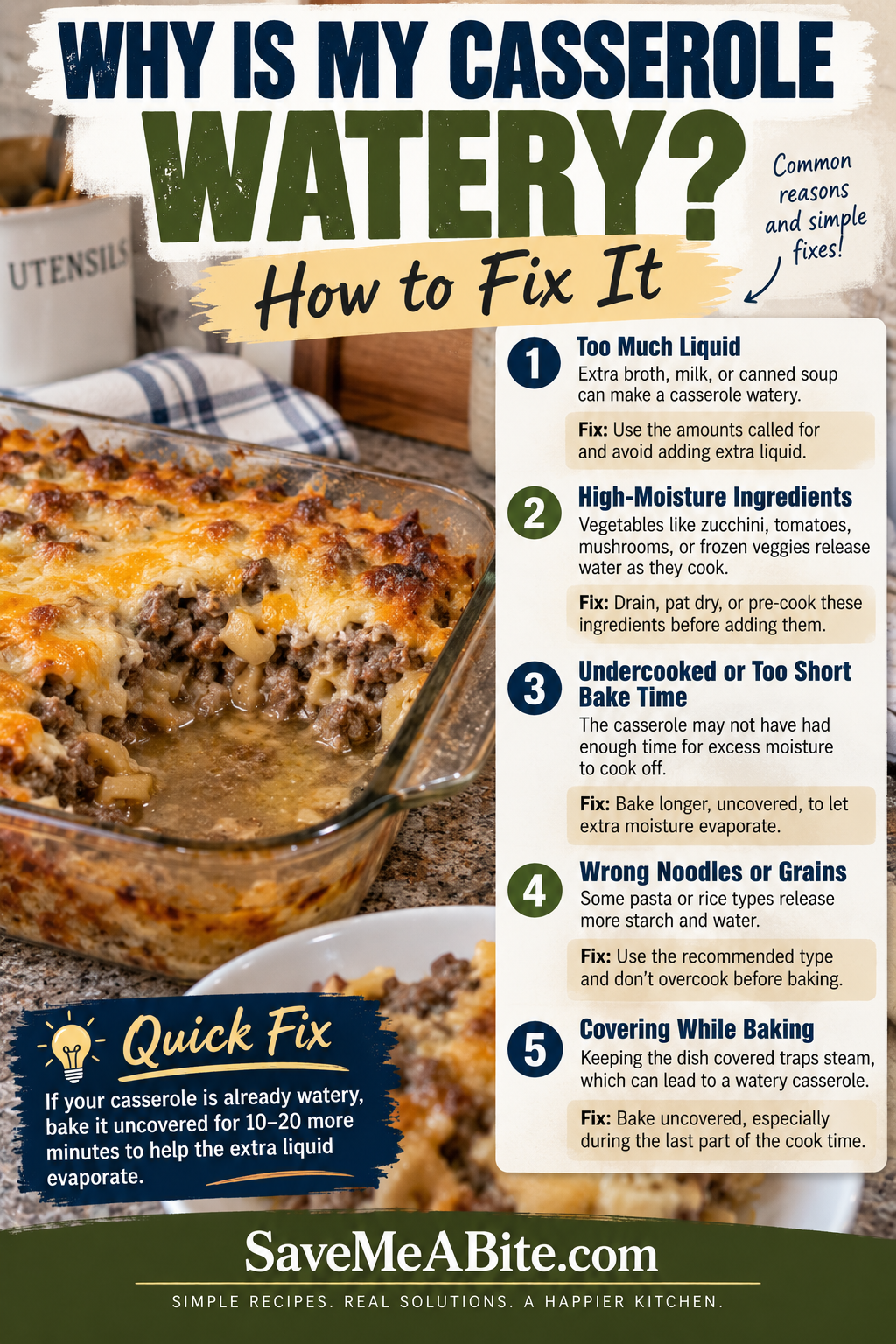
Let a Fully Cooked Casserole Rest Briefly
If the casserole just came out of the oven, give it about 10 to 15 minutes before deciding it is too watery.
Very hot sauce flows more easily, and some casserole fillings become firmer as they cool slightly. A brief rest also makes serving less messy.
This works best when the casserole is creamy and loose, with only a little liquid collecting around the edges. It will not fix several cups of excess broth or rice that never finished cooking.
The goal is a brief serving rest, not leaving dinner on the counter until it becomes cold.
Bake Uncovered if the Ingredients Are Done
If everything is cooked but there is still excess liquid, an uncovered stretch in the oven may help moisture evaporate.
Keep the recipe’s baking temperature and check after about five minutes. Continue in short intervals if needed, watching the edges, noodles, and topping.
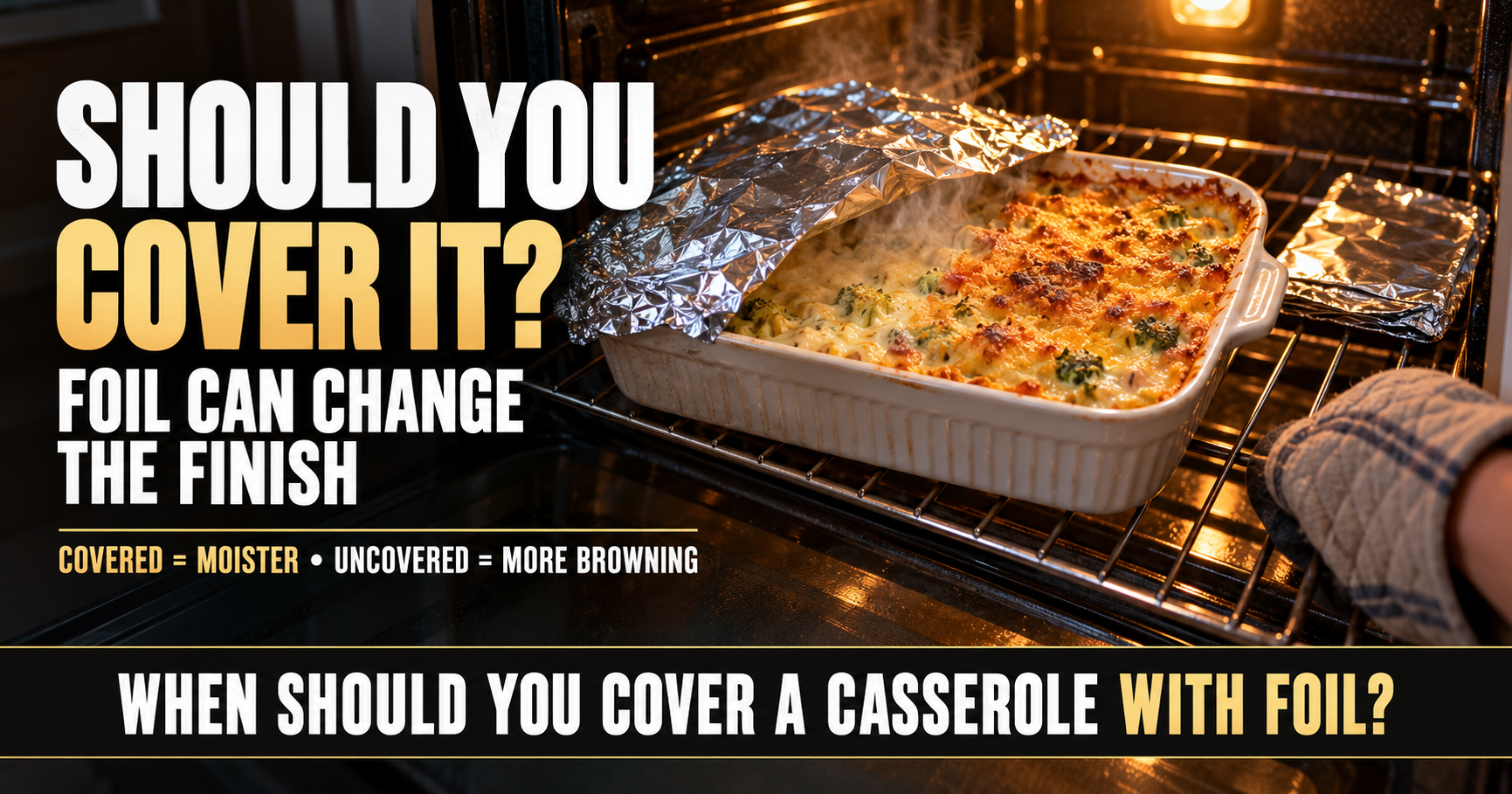
A loose piece of foil over an already browned area can help protect it, but a tightly sealed cover over the whole dish holds moisture in. The right approach depends on whether the casserole needs moisture retained or the topping needs to crisp, as explained in covering a casserole with foil.
Stop when the texture improves or the solid ingredients start drying out. A casserole with far too much liquid needs more than additional oven time.
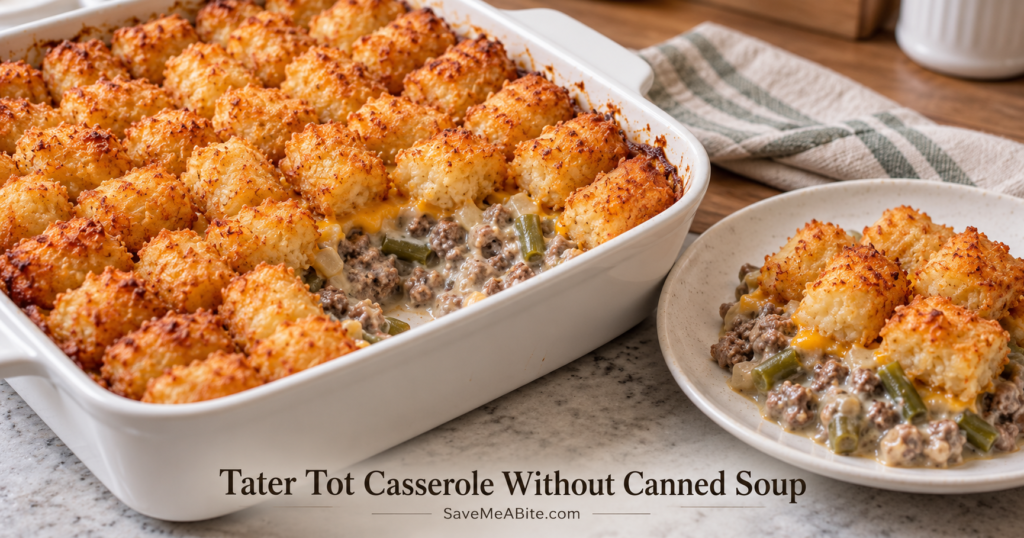
For a potato topping, keeping steam from being trapped matters too. Our tater tot casserole without canned soup belongs to this same cluster, where the filling and topping need to work together.
Remove a Small Amount of Loose Liquid if Necessary
If there is an obvious puddle in an empty serving corner, you can carefully spoon out a little of that free liquid.
Set the dish securely on a heat-safe surface first. Do not tilt a heavy, hot baking dish over the sink.
This is a last-minute serving adjustment. It does not thicken the sauce remaining in the casserole, and it can remove flavor along with moisture.
I would use it for a small, accessible puddle rather than repeatedly draining the whole dish.
Thicken Accessible Sauce Separately
For a loose, creamy casserole with plenty of sauce, you may be able to spoon some liquid into a saucepan and thicken it separately.
This works better for a spoonable mixture than a layered casserole you want to keep intact.
For roughly one cup of loose sauce, a cautious starting point is one teaspoon of cornstarch mixed smooth with one tablespoon of cold water. Stir the slurry again immediately before adding it.
Whisk it gradually into the hot sauce, bring the sauce to a gentle simmer while stirring, and assess the thickness before adding more. The amount needed depends on how much thickener is already present and how watery the sauce is.
Return the thickened sauce to the casserole and gently combine where practical. Heat the dish through again as appropriate.
Do not pour a cold slurry into one corner of the baking dish and expect the entire casserole to thicken evenly.
Figure Out What Is Actually Pooling in the Pan
“Watery” gets used for several different problems. Looking at the liquid helps you choose a fix.
Thin, Milky Liquid Points Toward a Sauce Problem
If the liquid is pale and creamy but runs off the spoon like milk, the sauce may have needed more thickening before assembly.
Another possibility is that the original sauce was fine, but wet ingredients diluted it during baking.
The useful question is whether the sauce was already thin when it went into the dish.
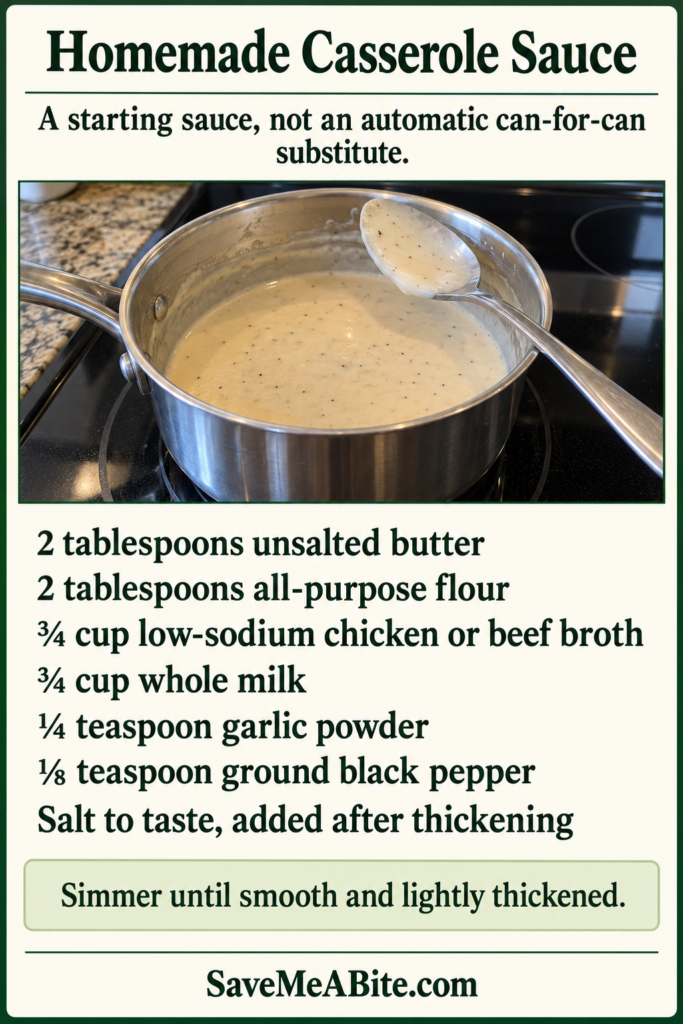
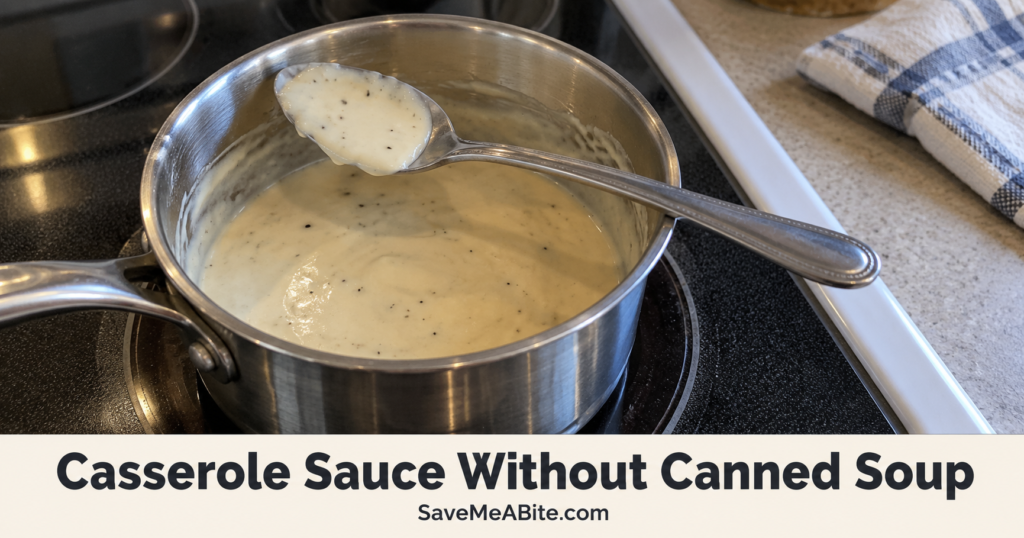
Our guide to making casserole sauce without canned soup explains the starting sauce and why different casserole ingredients require adjustments.
Clear or Lightly Colored Liquid Can Come From Vegetables
Zucchini, mushrooms, spinach, and other vegetables can release moisture as they cook.
Frozen vegetables may also carry ice or surface water. Canned vegetables bring packing liquid unless drained.
A thick sauce can become unexpectedly thin when those ingredients release moisture into it.
A Shiny, Oily Puddle May Be Grease
Grease often looks shiny and can separate into visible droplets or an oily layer.
It may come from ground beef, sausage, cheese, or a sauce that separated.
More baking will not evaporate fat the way it evaporates water. Adding starch also does not remove excess grease.
If the meat released a lot of fat during cooking, draining excess fat before assembly is usually the better prevention step.
Why Casseroles Turn Watery
The most common causes begin before the baking dish reaches the oven.
The Sauce Was Too Thin Before Assembly
For casseroles made with cooked rice, cooked noodles, or other already cooked ingredients, the sauce generally needs some body before it goes into the pan.
It should coat the ingredients rather than immediately collect underneath them.
That does not mean every casserole needs a thick, gravy-like sauce. A recipe using dry rice may intentionally begin with much more liquid because the rice needs it to cook.

Match the sauce to the recipe’s cooking method. A sauce intended for cooked noodles and a liquid mixture intended for dry rice serve different jobs. For a cooked-noodle example with a homemade sauce, see the ground beef noodle casserole without canned soup.
Wet Ingredients Were Added Without Draining
A few tablespoons of extra water from several ingredients can add up.
Drain canned ingredients when the recipe says to drain them. Let cooked pasta finish draining instead of transferring it with cooking water still trapped between the noodles.
For frozen spinach, recipes commonly call for thawing and squeezing out excess moisture. For other frozen vegetables, follow the recipe’s directions rather than automatically thawing everything.
If you cook mushrooms or zucchini first, let released liquid cook off as directed before combining them with the sauce.
Dry and Cooked Ingredients Got Swapped
This is one of the easiest ways to upset a casserole.
A recipe that calls for cooked rice has already accounted for rice that absorbed water during a separate cooking step. Replacing it with dry rice changes both the liquid requirement and the cooking time.
The reverse creates another problem. If you use cooked rice in a recipe designed for dry rice but keep all the original liquid, much of that liquid may remain in the pan.
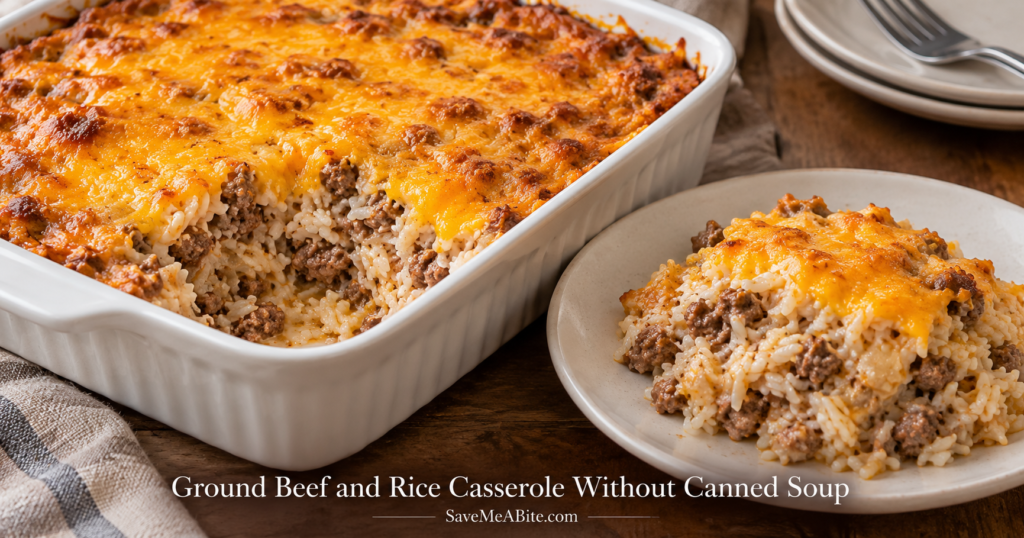
Our ground beef and rice casserole without canned soup uses cooked rice, so that distinction matters before making substitutions.
Cooked pasta and dry pasta are not interchangeable either. Even different dry pasta shapes can absorb liquid and soften at different rates.
The Dish Was Covered Longer Than Intended
A cover traps moisture. That is useful when the recipe needs steam to cook rice, soften ingredients, or prevent early drying.
It is less helpful when the dish needs to lose excess water or crisp a topping.
Follow the recipe’s covered and uncovered stages. Leaving foil on for the entire bake can change the finished texture.
The Baking Dish Changed the Depth
The same mixture sits deeper in a smaller dish and shallower in a larger one.
A deeper casserole may take longer to heat through and lose moisture differently. A wider dish exposes more surface area, which can encourage evaporation but also dry out edges.

Do not switch pan sizes and assume the original timing will still be right. Make sure the dish has enough capacity, and check both the center and the texture.
Dairy or Cheese Separated
Sometimes the liquid comes from a sauce breaking rather than simply having too much water.
A separated sauce may look grainy, curdled, or oily. Overheating and certain ingredient substitutions can contribute.
Adding more cheese is not a dependable fix. It can add more fat without solving the underlying sauce problem.
When adding cheese to a homemade sauce, use gentle heat and follow the recipe’s method instead of boiling the finished cheese sauce aggressively.
Watery Casserole With Hard Rice Needs a Different Fix
If the rice is still hard, drying out the pan is not the first move.
Dry rice needs sufficient liquid, heat, and time. Many rice casseroles also rely on a properly fitted cover to retain moisture during cooking.
Check the original recipe. Confirm that you used the correct type of rice, the intended amount of liquid, and the specified covered cooking method.
Do not assume instant rice, regular long-grain rice, and brown rice will cook the same way.
If liquid remains but the rice is hard, continue following the recipe’s covered cooking approach and check progress. If the dish has dried out while the rice remains hard, any added hot liquid should be measured and guided by the recipe rather than poured in freely.
A browned top does not tell you whether the rice underneath has softened.
Watery Noodle Casserole Can Become Mushy if You Keep Baking It
When noodles are already tender, prolonged baking can make them softer while you wait for the sauce to reduce.
Start with a brief rest. If needed, try a short uncovered bake and check closely.
If there is substantial excess liquid, removing some accessible liquid or thickening sauce separately may preserve the noodles better than another long stretch in the oven.
For the next batch, pay particular attention to draining and sauce consistency. Our ground beef and egg noodle casserole is a relevant recipe to use alongside those checks.
What I Would Avoid Adding to a Finished Casserole
A rescue ingredient should solve the problem without creating a new one.
Dry Flour
Sprinkling dry flour into a baked casserole can leave lumps and pockets that taste floury.
Flour needs to be properly dispersed and cooked. It is much easier to control in a saucepan than inside a finished baking dish.
Uncooked Rice or Pasta
Adding dry rice or noodles to absorb liquid changes the recipe midstream.
They need enough moisture and cooking time to become tender, while the ingredients already in the dish continue cooking. You may end up with hard rice surrounded by overcooked food.
Large Amounts of Breadcrumbs
Breadcrumbs can absorb some moisture, but mixing in a large quantity can turn a creamy filling pasty.
A topping may improve the surface without fixing the liquid underneath.
Extra Cheese Without Checking the Cause
More cheese may make a dish richer, but it is not a reliable thickener for every casserole.
If the puddle is mostly fat or the sauce has separated, extra cheese may make the problem worse.
How to Prevent a Watery Casserole Next Time
Before assembling, check the recipe’s ingredient preparation and look at the mixture itself.
- Confirm whether rice, pasta, and meat should be raw or cooked.
- Drain canned foods and cooked pasta as directed.
- Prepare moisture-heavy vegetables according to the recipe.
- Cook homemade sauce to the intended consistency before combining.
- Measure added milk, broth, and other liquids.
- Use the specified baking dish or account for a change in depth.
- Follow the covered and uncovered baking stages.
- Allow a brief rest before serving when appropriate.
For a casserole built around cooked ingredients, the assembled filling should generally look coated and moist, rather than like solids sitting in a large pool of liquid.
For a dry-rice casserole, that same visual check does not apply. The liquid is part of cooking the rice.
Check Safety Separately From Texture
A casserole can look thick and still need more cooking. It can also be fully cooked but have an unpleasantly thin sauce.
Use the recipe’s food safety guidance and a food thermometer when needed. Do not rely only on browned cheese or bubbling edges.
For leftovers, USDA recommends reheating to 165°F. Refrigerate perishable leftovers within two hours, or within one hour when the surrounding temperature is above 90°F. Divide a large amount into shallow containers for faster cooling rather than waiting for the entire baking dish to cool on the counter.
Questions About Watery Casseroles
Will a casserole thicken as it cools?
Some will firm up during a brief rest, especially when the sauce is already properly thickened. That can help a loose casserole hold together better.
Resting will not remove a large amount of excess liquid or finish cooking hard rice.
Should I bake a watery casserole covered or uncovered?
If the ingredients are fully cooked and excess water is the problem, uncovering can help it evaporate.
If rice or another ingredient still needs the recipe’s covered cooking stage, keep following that method first. Removing the cover too early can leave the dish dry before the ingredients are done.
Can I use cornstarch to fix a watery casserole?
Sometimes, particularly when you can remove loose sauce, thicken it in a saucepan, and combine it with the dish again.
Mix cornstarch with cold liquid first. Adding dry cornstarch directly to a hot casserole can cause lumps, and a slurry still needs heat and even distribution to work.
Why is my casserole watery after reheating?
Vegetables can release additional moisture, and some sauces separate during cooling, freezing, or reheating.
Reheat only the portion you need, check it as it heats, and avoid adding extra milk or broth before you know whether the sauce actually needs it.
Is a creamy casserole supposed to hold its shape?
Not always. Some casseroles are meant to be scooped and served with a loose sauce. Others are designed to cut into neat portions.
Judge the dish against its intended texture. A creamy spoonful that settles on the plate is different from a serving surrounded by a large puddle of thin liquid.
Mara Whitcomb writes practical recipes and cooking guides for Save Me a Bite.